
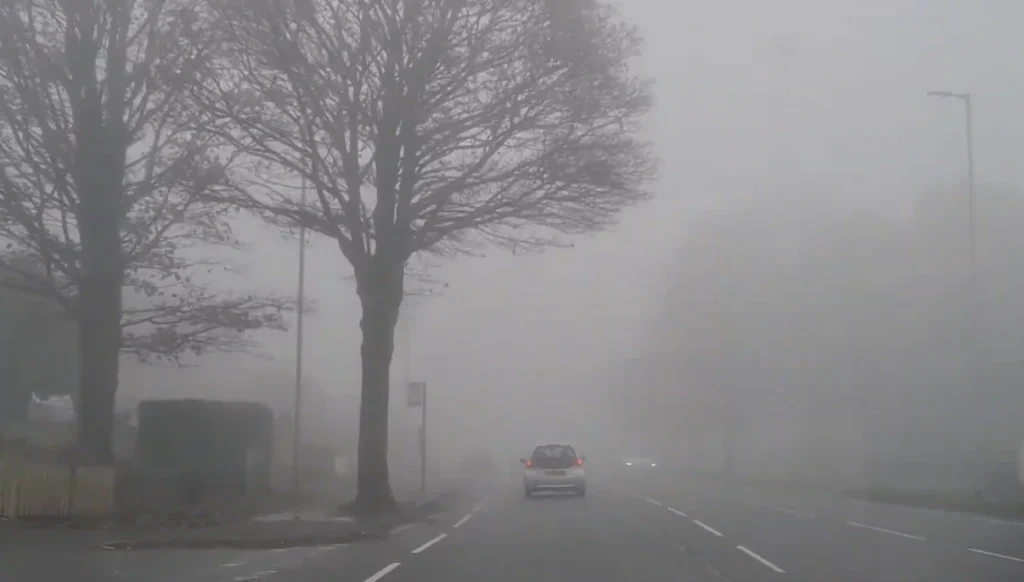
Winter Weather and Early Flights: How to Plan Your Airport Transfer in Fog, Ice and Snow
An early flight is stressful enough on a clear morning. Add fog on the M27, frost on the slip roads or a snow warning on the forecast, and the question changes from “what time should I leave?” to “will I get there at all?”
This guide answers that question in plain terms. It explains how much extra time to allow in different winter conditions, what the Highway Code says about driving in fog and ice, what to do if your flight is delayed by the weather, and how a pre-booked airport transfer helps on the mornings when it matters most.
Last updated: November 2026. Weather and flight information changes quickly, so always check the forecast and your airline before you travel.
For an airport transfer in bad weather, leave earlier than you normally would, book a pre-arranged pickup the day before, and give your flight number so your driver can track delays. As a rough guide, add about 30 minutes for frost or heavy rain, and 45 to 60 minutes or more for fog, ice or snow, then add more again if there is a severe weather warning. If conditions are truly dangerous, contact your driver and your airline early rather than waiting until the last minute.
Key Takeaways
- Plan the journey around the conditions, not the clock. A journey that takes 90 minutes on a dry day can take much longer in ice or fog.
- Early mornings carry the most risk. Frost, ice and fog are most likely overnight and around dawn, which is exactly when early flights depart.
- Stopping distances can be up to ten times longer on ice. The Highway Code warns drivers to take care even when roads have been treated.
- Fog affects flights as well as roads. Low visibility can delay departures, so check your airline’s updates before you leave and again on the way.
- A pre-booked transfer removes guesswork. Your pickup time is agreed in advance, and a professional driver can adjust the route and pace on the day.
How Does Winter Weather Affect an Airport Transfer?
Bad weather affects an airport journey in three separate ways:
- The road. Ice, snow, standing water and fog slow traffic and make drivers brake earlier and more gently. Queues form quickly when one incident closes a lane.
- The airport. Reduced visibility, ice on the apron and snow clearance can delay flights or cause cancellations, which changes what time you actually need to be there.
- Everything around it. Public transport can be cancelled or reduced, car parks fill with people who decided to drive at the last minute, and drop-off areas get busier. Our guide to UK airport drop-off charges explains why a short stop at the terminal can be expensive and time-limited.
The danger is not usually one big problem. It is several small delays stacking up on a journey with a fixed deadline.
What Does the Highway Code Say About Fog and Ice?
The Highway Code gives clear guidance that applies to every driver, including your airport taxi:
- Fog: drivers must use headlights when visibility is seriously reduced, generally when they cannot see for more than 100 metres. Fog lights may also be used but must be switched off when visibility improves. In fog, drivers should keep a safe distance and be able to stop within the distance they can see.
- Ice and snow: drivers should take care even if roads have been treated, and should keep well back from the vehicle in front, because stopping distances can be up to ten times greater than on dry roads.
In practice, this means a careful driver will travel more slowly, leave bigger gaps and take longer. Allowing for that in your plan is not being overcautious. It is simply how the journey works in those conditions.
How Much Extra Time Should You Allow?
There is no single right answer, because it depends on the road and the weather. The table gives practical guidelines for planning your pickup. These are suggestions, not official rules, and your driver may recommend different margins on the day.
| Conditions | Suggested extra time | Notes |
|---|---|---|
| Dry and clear | Normal plan | Still allow a small buffer for early starts |
| Frost or heavy rain | About 30 minutes | Slower speeds, more spray, occasional queues |
| Fog (visibility under 100 metres) | 45 to 60 minutes | Drivers slow right down and keep larger gaps |
| Ice or light snow | 45 to 60 minutes | Overnight and early-morning ice is the hardest to predict |
| Heavy snow or a severe weather warning | 60 minutes or more, and check first | Consider travelling earlier or rebooking if advised |
To work out your pickup time, start with your flight, subtract the time your airline asks you to be at the airport, then subtract your normal journey time, then subtract the extra buffer from the table.
When Should You Arrive at the Airport?
Airlines and airports set their own check-in and bag-drop deadlines, and these vary by airline, route and airport. Many ask passengers to arrive roughly two hours before a short-haul flight and about three hours before a long-haul one, but you should always follow your own booking confirmation.
On a winter morning, aim to arrive at the start of that window, not the end of it. If the weather is bad on the roads, you gain nothing by cutting it fine, and you gain a great deal by arriving calm with time to spare.
Early-Morning Flights: Why They Are the Riskiest
Early flights combine three things that make winter travel harder:
- The coldest part of the day. Frost and black ice are most common overnight and just after dawn.
- Fog. It often forms or lingers in the early hours, then lifts later in the morning.
- Less margin for error. If you leave at 3am or 4am, there is no later train or later taxi to fall back on.
If you have a very early departure, consider these options:
- Book the pickup the day before. A confirmed car at a confirmed time removes the biggest source of morning stress.
- Leave earlier than you think you need to. The roads may be quiet, but a short delay at a closed lane or a slow section costs more at this hour.
- Check the forecast the night before and again when you wake up. Look at both the Met Office forecast and any road warnings.
- Consider a night near the airport. For a very early flight in forecast bad weather, staying nearby can be the safest choice.
What If Your Flight Is Delayed or Cancelled by the Weather?
Weather often affects flights even when the roads are fine. The most useful habits are:
- Check your airline’s app or website before you leave. Do not rely on the departure board alone.
- Keep your driver’s contact details to hand. If your plans change, tell us as early as you can.
- Do not assume a delay means you can arrive late. Airlines can bring a departure forward or update times at short notice, so keep following their guidance.
- If a flight is cancelled, follow your airline’s instructions on rebooking and care, and let us know so we can help rearrange your transfer.
Packing and Preparation for a Winter Airport Run
A few small steps make the journey easier:
- Have your passport, tickets and booking confirmations ready the night before.
- Charge your phone, so you can receive updates and contact your driver.
- Dress warmly for the pickup, even if you plan to be in a heated car and a heated terminal.
- Allow a few extra minutes at the door for slippery paths and heavy luggage.
- Save the Southampton Taxis number, +44 2380 005 005, in your phone.
Should You Drive Yourself or Book a Taxi in Bad Weather?
Many people choose to drive themselves to an airport, then reconsider when the forecast turns. Here is how the options compare in winter.
| Driving yourself | Pre-booked taxi | |
|---|---|---|
| Winter conditions | You handle ice, fog and tiredness yourself | A professional driver handles the road |
| Early starts | You are driving at the start of the day, often tired | You can rest before your flight |
| Parking | Car parks fill and long-stay shuttles add time | You are dropped off, with no parking to find |
| Delays | You must monitor everything yourself | Flights can be tracked and the pickup adjusted |
| Return journey | You drive home after a long trip, possibly in the dark | A booked return can be waiting |
| Cost certainty | Fuel, parking and possible drop-off fees add up | Your fare is agreed at booking |
If you choose to drive, plan for parking and charges too. Our guide to how to book a taxi in Southampton explains how simple it is to arrange a pickup instead.
What Southampton Taxis Does in Bad Weather
Our airport transfers run 24 hours a day, every day of the year, with fixed fares agreed at the time of booking, so a slower journey in fog or ice does not change what you pay. Our drivers are fully licensed and DBS checked, and for airport arrivals we track your flight so your pickup keeps pace with early or delayed landings.
If severe weather is forecast for your travel day, contact us in advance. We will talk through your pickup time with you. You can see all the routes we cover on our airport transfer page, including Heathrow, Gatwick, Bristol and Southampton Airport.
Winter Airport Transfer Checklist
- Book your transfer the day before, or earlier for very early flights
- Give your flight number so delays can be tracked
- Check the weather forecast the night before and again in the morning
- Add extra time to your pickup: about 30 minutes for frost or rain, 45 to 60 minutes or more for fog, ice or snow
- Check your airline’s app for delays before you leave
- Keep passport, tickets and your driver’s contact details easy to reach
- Tell your driver straight away if your plans change
- Book your return journey in advance
Frequently Asked Questions
How early should I leave for the airport in fog?
Add about 45 to 60 minutes to your normal journey time, and more if fog is dense on your route. Drivers slow down and keep larger gaps in fog, so the journey takes longer than usual.
How much extra time should I allow for ice and snow?
Allow at least 45 to 60 minutes extra for ice or light snow, and more for heavy snow or a severe weather warning. Check the forecast and your airline’s updates before you leave.
Is it safe to travel to the airport in icy conditions?
It can be, with care. The Highway Code warns that stopping distances can be up to ten times greater on ice, so drivers need to travel slowly and keep well back. If conditions are severe, contact your driver and airline early.
What should I do if my early-morning flight is delayed by fog?
Check your airline’s app for updates before you leave and again on the way. If you have booked an arrival pickup, give your flight number so your driver can track it and adjust the time.
Should I book an airport taxi the day before in winter?
Yes. A confirmed pickup the day before removes the stress of finding a car on a cold, dark morning, and gives you a fixed fare and a set time.
Do airport taxis run in snow?
Taxi services generally try to operate in winter weather, but severe conditions can affect roads and schedules. If snow is forecast, contact your taxi company in advance to confirm your pickup time.
Will my taxi wait if my flight is delayed?
For arrivals, Southampton Taxis tracks your flight and adjusts your pickup for early or delayed landings. Tell us if your plans change, so we can keep your transfer on schedule.
Is a taxi better than driving to the airport in bad weather?
For many travellers, yes. A taxi means you do not drive in poor conditions, avoid parking and shuttle delays, and have a fixed fare, though the best choice depends on your journey and comfort.
Book Your Winter Airport Transfer
Do not leave an early flight to chance. Southampton Taxis offers fixed-fare airport transfers with flight tracking, 24 hours a day.
Book your airport transfer Call +44 2380 005 005, email info@southamptontaxis.net, or book online.